The Ins and Outs of Intrauterine Devices
Your guide to choosing the right IUD for your body

Your guide to choosing the right IUD for your body
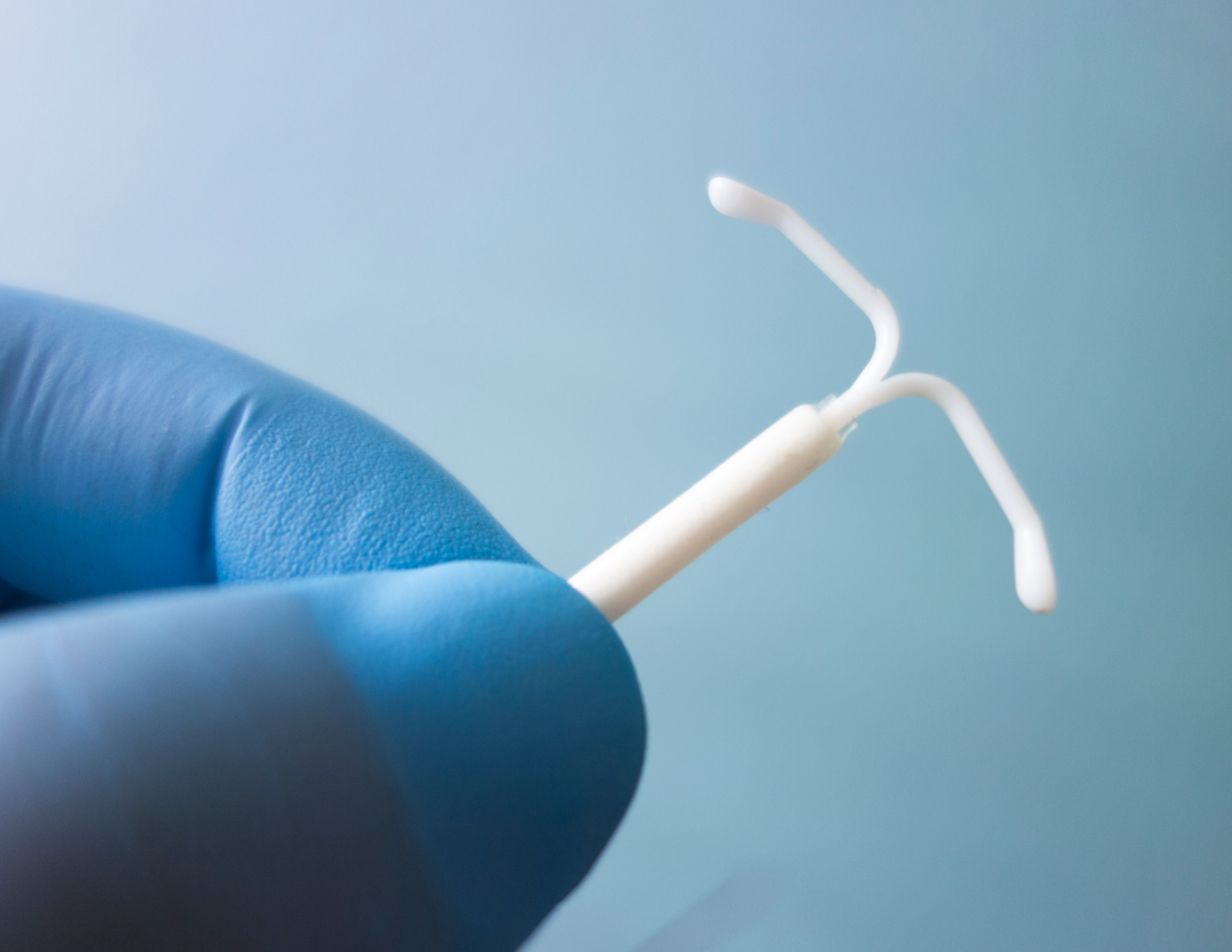
IUDs (or intrauterine devices) are one of the most convenient and effective forms of contraception and cycle regulation available. But even among IUDs, there are so many different types to choose from! Knowing your options can help narrow down what is most important to you and help you find the right fit.
An IUD is a T-shaped device that is placed into the uterus by a healthcare provider. It is a type of long-acting reversible contraceptive (LARC). Let’s break this term down:
It’s worth noting that IUDs do not protect against sexually transmitted infections (STIs, sometimes better known as STDs). If you wish to lower your risk of STIs, use barrier methods like condoms or dental dams, and get tested regularly. IUDs are mostly used for preventing pregnancy or for treating painful, heavy periods.
For transgender and nonbinary folks, having a period can trigger gender dysphoria. Since some IUDs can be used to help stop or lessen menstrual bleeding, IUDs can be part of gender-affirming care.
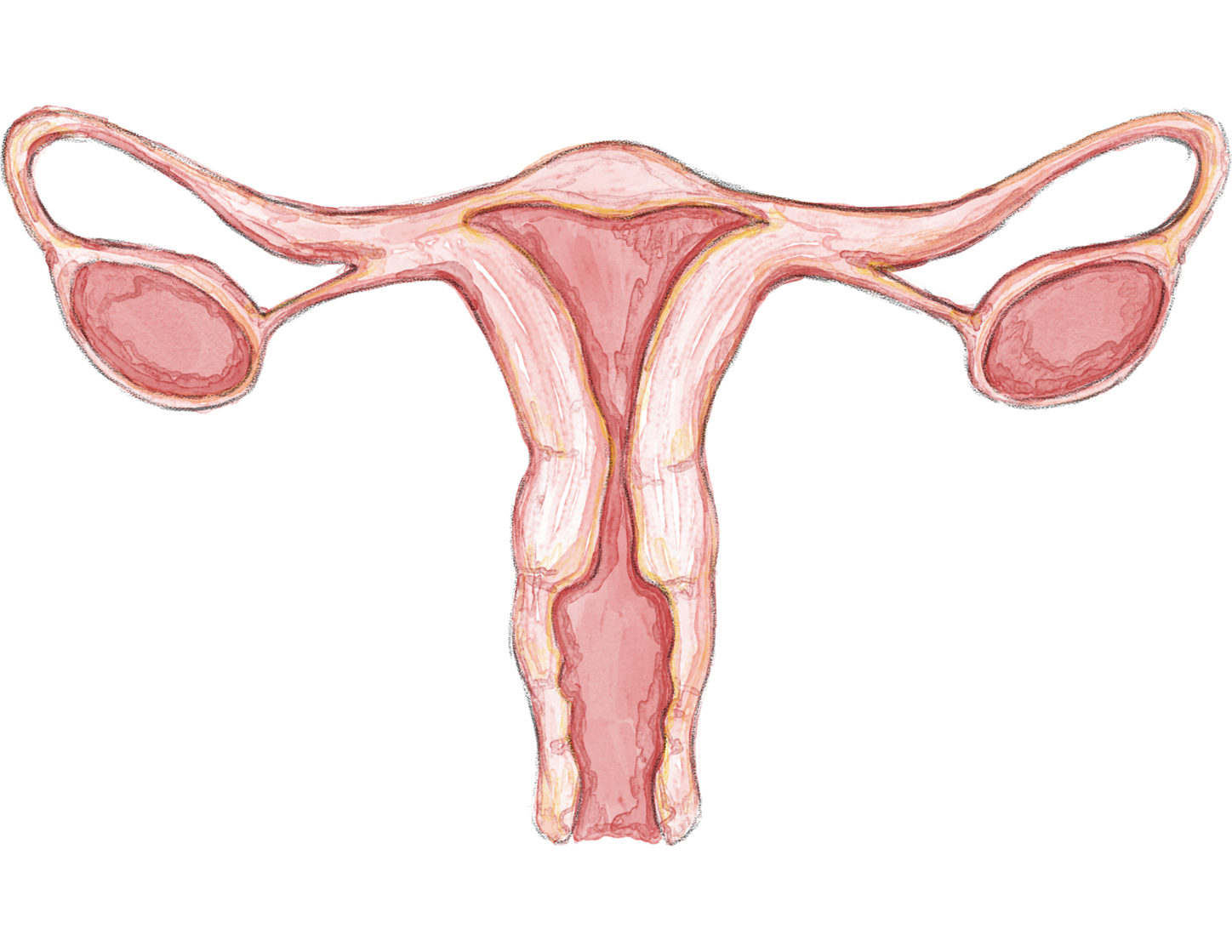
Certain IUDs can also be used as emergency contraception. Oral emergency contraception, such as Plan B and Ella, are not as effective for certain bodies. IUDs, on the other hand, can be used regardless of weight or BMI, and have an extremely high effectiveness (near 100%).
There are two main categories of IUD: hormonal, and non-hormonal.
The hormonal IUDs contain the hormone levonorgestrel, a form of progestin. There are four different types of hormonal IUDs: Skyla, Kyleena, Liletta, and Mirena.
What is progestin? Progestin is the synthetic version of the hormone progesterone. Progesterone is made by your body and is one of the hormones that supports menstruation and early pregnancy.
One thing to note about hormonal IUDs is that they often work for people who have negative side effects from pills, patches, rings, or other hormonal methods. The hormones in IUDs stay fairly localized (aka in your uterus). Because there is no estrogen, headaches are far less common. They also work well for people who have migraines with aura that are unable to use estrogen-based methods. Of course, everyone’s bodies are unique. There may be some trial and error no matter what method you choose.
The non-hormonal IUD, also known by its brand name Paragard, is made with copper.
These five options differ from one another in size, duration of use, and side effects. Each has a unique set of factors to consider when deciding the right option for you. Unfortunately, it is hard to predict how someone’s body may react to a type of birth control. However, this article will give you a starting point so you can talk to your provider about what you think might work for your unique body.
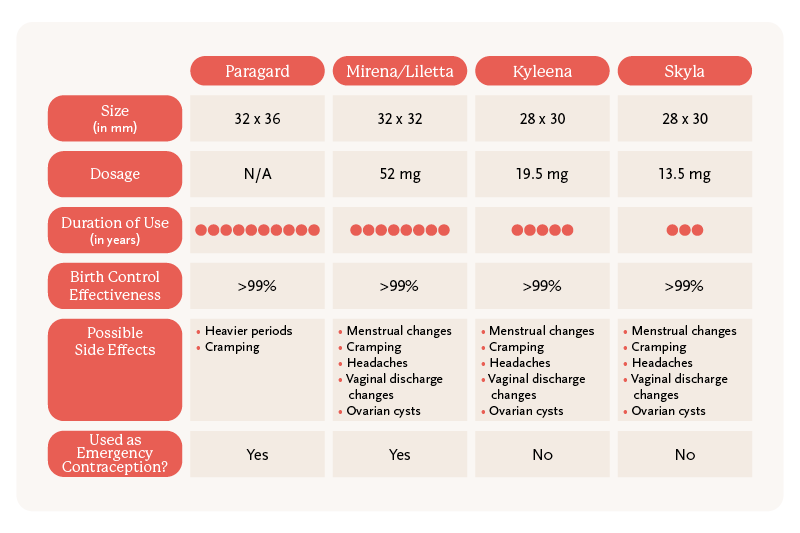
Only 8-12% of people report having any headaches from IUDs.
Paragard is the only non-hormonal IUD on the market. The Paragard IUD is wrapped with copper, which is toxic to sperm and egg cells. It creates an environment in the uterus that is inhospitable for a pregnancy.
Paragard is FDA-approved for 10 years of use, but evidence shows that Paragard is safe and effective for even longer.
Yes! Paragard can be used as emergency contraception if placed within 5 days (120 hours) of unprotected intercourse. It is more than 99% effective.
Paragard is a good option for anyone who prefers to limit exogenous (outside) hormone exposure for any reason, including:
For people with heavy and painful periods, Paragard might not be the best choice. Paragard causes an inflammatory response in the uterus. This may result in more intense cramping and heavier period flow. For some people these changes last only the first 3-6 months. For others, they last longer.
Anyone who has a history of severe iron-deficiency anemia should take caution before having Paragard placed. Paragard may worsen anemia due to a heavier period flow.
Mirena and Liletta are two different brands of very similar IUDs. They are both hormonal IUDs and contain 52 mg of the hormone levonorgestrel. A small dose of levonorgestrel is released from the IUD every day in order to maintain a steady state of the hormone in the body.
Levonorgestrel IUDs work in a few different ways. The hormone thickens cervical mucus which makes it very difficult for sperm to travel to an egg. It also helps keep the lining of the uterus super thin, which prevents eggs from attaching to the uterine wall.
The Mirena and Liletta are each approved for up to 8 years for pregnancy prevention.
Yes! Both Mirena and Liletta can be used as emergency contraception if placed within 5 days (120 hours) of unprotected intercourse. Both are more than 99% effective.
One of the most common side effects of levonorgestrel IUDs is irregular bleeding. However, for many people using Liletta or Mirena, periods become much lighter. In fact, many people with these IUDs don’t experience monthly bleeding at all. For this reason, Liletta or Mirena can be a great option for people with painful or heavy periods, breakthrough bleeding, or iron-deficiency anemia. Mirena is actually FDA-approved to treat abnormal uterine bleeding for up to 5 years.
Mirena and Liletta are also great options for transgender or non-binary people who wish to stop or lessen their periods. The level of levonorgestrel in these 2 brands is the highest out of the hormonal IUDs and therefore most likely to affect menstrual cycles.
People who prefer to have regular monthly periods may find that their cycles are really different on the Mirena or Liletta IUDs. If skipping periods or experiencing irregular spotting would stress you out, it might be better to choose another method.
It's totally okay to get your IUD inserted or removed while you're on your period!
The Skyla IUD contains levonorgestrel, and functions in the same way as the other hormonal IUDs. The difference is that Skyla is smaller in size, and has a lower dose of levonorgestrel.
Skyla is approved for 3 years of use.
Due to the lower amount of levonorgestrel, Skyla is not used as emergency contraception.
Skyla was specifically tested in people who have not been pregnant before. It is slightly smaller in overall size to fit into a smaller uterus. This may make it a good choice for teenagers.
Skyla would also be the right fit for someone looking for a hormonal IUD with the lowest possible hormone dose.
For someone looking for a birth control method that completely stops periods, Skyla might not be the best option. At the end of the first year of use, only 6% of people using Skyla stopped getting periods (as opposed to 19-20% of Liletta and Mirena users).
The Kyleena IUD contains levonorgestrel, and functions the same way as the other hormonal IUDs. It is the same size as Skyla. What makes Kyleena unique is its hormone dose. The levonorgestrel dose of Kyleena falls between that of Mirena/Liletta and Skyla at 19.5mg.
Kyleena is approved for 5 years of use.
Due to the lower amount of levonorgestrel, Kyleena is not used for emergency contraception.
Kyleena is great for someone looking for a longer-lasting, smaller IUD. Some people with Kyleena have lighter bleeding overall, and many do not get periods with Kyleena in place. This IUD may be worth trying, regardless of pregnancy history, for people who are looking for a slightly smaller and lower dose option with similar benefits to the Mirena or Liletta.

We’ll be honest: for most people, the IUD insertion process is pretty uncomfortable. Most people describe feeling sensations similar to intense menstrual cramping.
If you are worried about the pain, here are a few ways you can advocate for yourself:
If you’re feeling stressed about the whole process (and not just the pain), here are a few suggestions for making yourself more comfortable:
MSN, CNM · she/her
Bridgette enjoys supporting people through collaborative, person-centered reproductive healthcare. As a new mom herself, she appreciates how powerful and transformative pregnancy and birth can be.
Connect with Bridgette →Longer visits, a team that answers, and a midwife at your side from the first visit through a full year after birth.
Book now
Postpartum anxiety can be overwhelming — but it doesn’t have to be

With midwives Michele Augur and Farrah Ka’Healani Rivera

You don’t have to do this alone
We're here to support you, whatever your needs are. Whether you have a question or need to schedule an appointment, call or text us and we'll get back to you as soon as possible. Our office is open 8am – 4pm Monday – Friday.